Volume 41: NZSG - NZgNC Annual Scientific Meeting 2025, 26–28 November 2025, Fly Palmy Arena, Palmerston North
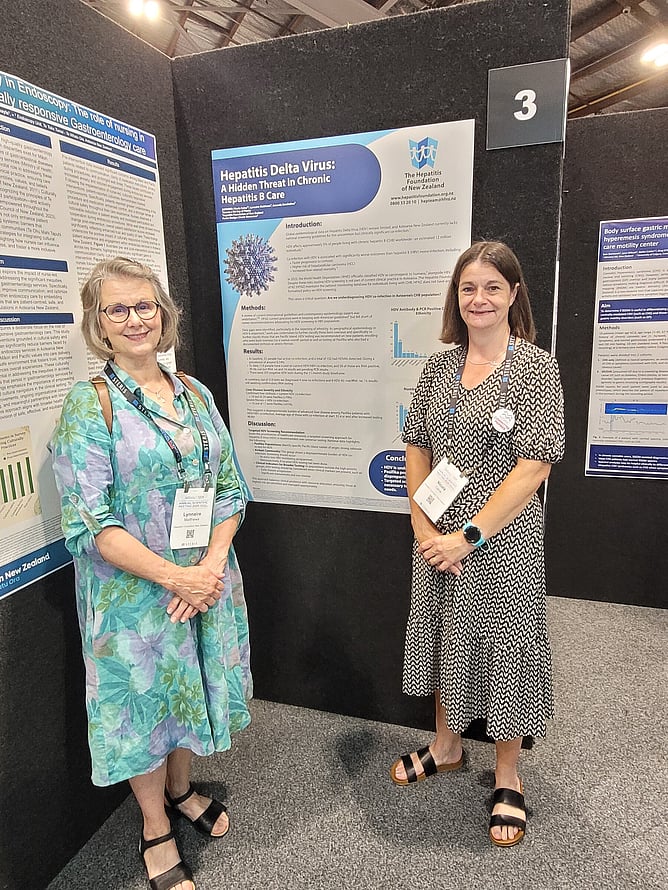
Hepatitis Delta in Aotearoa/New Zealand
Nicola Caine 1, 2 , Lynnaire Matthews 1 , Amanda Broxholme 1
1 Hepatitis Foundation New Zealand, Tauranga, New Zealand, 2 Hepatology Nurse Practitioner, Tauranga, New Zealand
Introduction: Global hepatitis delta (HDV) epidemiology is limited, especially in the Pacific region. International guidelines vary but are increasingly aligning with WHO's recommendation to screen all those living with chronic hepatitis B (HBV)for HDV. Aotearoa lacks national HDV screening guidelines. Is HDV being under diagnosed by HFNZ, should we implement universal screening?
International HDV epidemiology data suggest prevalence of ≈5% in those living with HBV. Early identification of HBV/HDV co-infection is critical to ensure timely access to treatment and surveillance for hepatocellular carcinoma in this clinically significant subset of individuals living with HBV.
Methods: A review of current international guidelines and contemporary epidemiology papers was undertaken. HFNZ current practices were in keeping with American guidelines but fell short of newer recommendations advocating for HDV screening in HBV population. Data gaps were identified, particularly in the reporting of ethnicity. As geographical epidemiology in HDV is important, work was undertaken to further classify those born overseas and specifically to further classify those that are Pacific Island. HDV testing was recommended on new patients enrolling who were born overseas.
Results: At baseline, 55 patients had a confirmed coinfection, around 0.4% of HFNZ active monitoring population. Only six of these people were not from either Aotearoa or Pacific Islands. At midway point, a further four new cases, with coinfection, increasing prevalence to 0.5%. Concurrent cirrhosis/severe fibrosis in Pasifika with current or past HDV infection were high.
Conclusions: Current data suggest that prioritising specific populations and clinical indicators is effective for HDV case finding in Aotearoa. As the dataset expands, this approach may inform a transition toward HBV population screening. Accurate ethnicity classification is critical unless universal screening is adopted. HDV risk varies by geography, and targeted screening enables timely treatment and enhanced hepatocellular carcinoma surveillance for high-risk groups.